When a Morning Voice Goes Silent
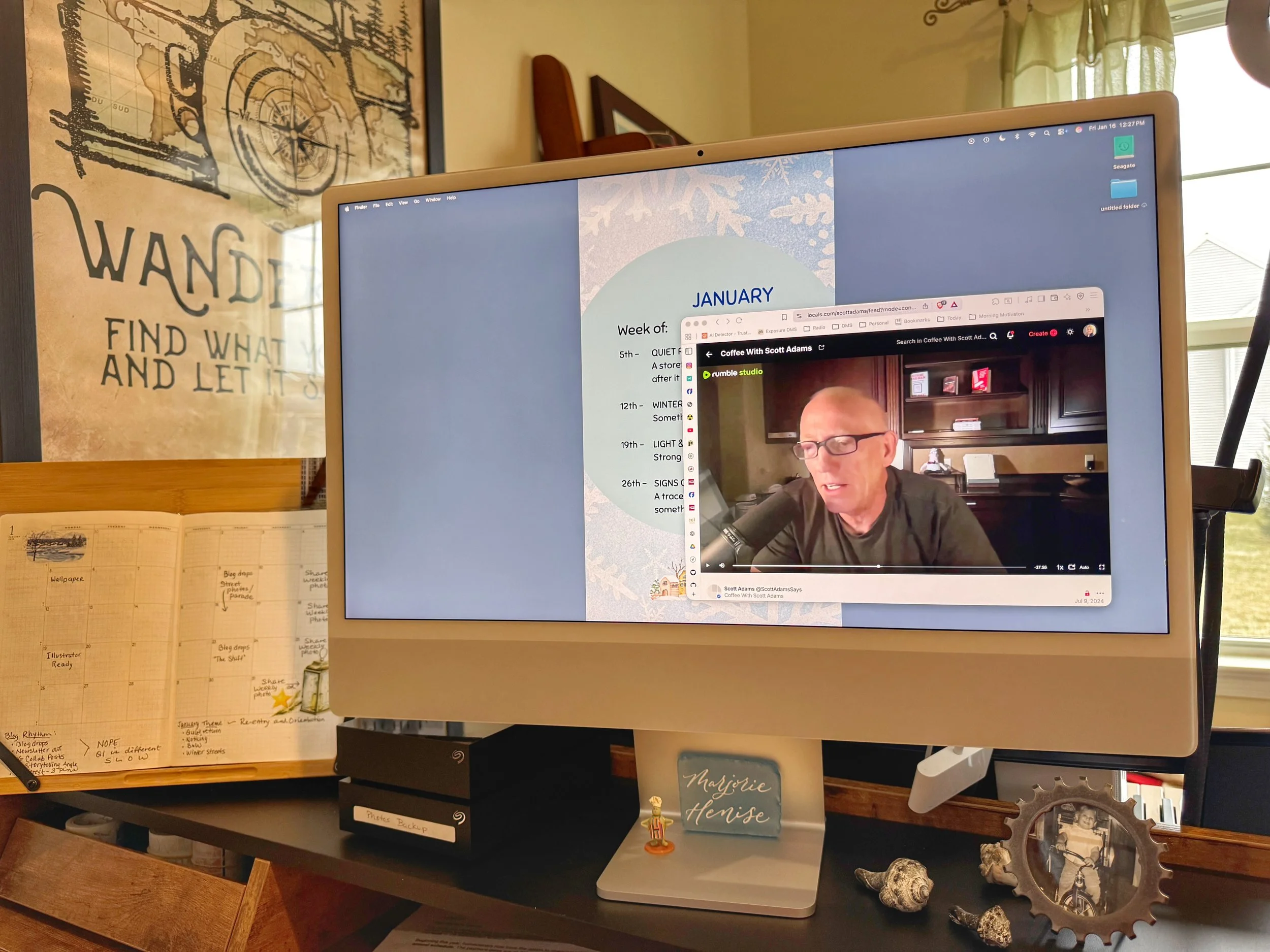
I didn’t expect to feel this unsettled by the loss of a daily podcast. But here I am.
Scott Adams passed away this week. For those who only knew his name in passing, or didn’t know it at all, Scott was best known as the creator of Dilbert. But for many of us, he was something else entirely: a daily voice, a live presence, and a place to land in the morning.
For a long time… years, really… I started my mornings with Scott Adams. Not in a sit-down-and-listen way. More like old-school talk radio. I’d turn him on live, open my inbox, plan my day, and move papers around my desk. Some mornings, I caught everything he said. Other mornings, I missed most of it.
That was part of the magic.
There was no pressure to get the message. No guilt if I tuned out. He was just… there.
In his final letter to his audience, Scott wrote:
“I didn’t plan it this way, but it (his show) ended up helping lots of lonely people find a community that made them feel less lonely.”
He was right. Completely right.
And I think that’s what I’m grieving… not just the man, but the presence.
It wasn’t about politics
People who didn’t listen regularly may assume the appeal was ideological or political. For me, it wasn’t. What kept me coming back was something quieter and harder to put into words.
Scott thought out loud.
He reframed things.
He questioned assumptions.
He sometimes said things imperfectly, most of the time brilliantly… but always without fear of disapproval.
Most importantly, he modeled independent thinking in real-time. His lessons taught me how to stand up for my beliefs, even when I disagreed with his conclusions.
He didn’t package wisdom. He didn’t preach. He didn’t tell people what to think. He invited listeners into the process of thinking itself, and that made you feel less alone in your own messy, unfinished thoughts.
The part that mattered most
There was also something deeply comforting about the shape of the experience.
You could come and go. Miss a day. Miss a week. Miss an entire train of thought. No catching up required. No backlog guilt. No sense that you were failing if you weren’t paying attention.
I remember one time, after I got home from a long trip to Brazil, I commented in the live chat,
“Boy, am I glad to be back home from Brazil and in my morning place.” Scott glanced at the comment and said, “Well, it’s about time you got back here, Marjie.”
It was a small moment.
But it mattered.
Because it meant I wasn’t just listening… I was recognized. A regular. Someone whose absence and return were registered.
That kind of connection doesn’t happen often, especially in online spaces. It can’t be manufactured or scaled. It comes from showing up, day after day, thinking out loud, and allowing others to quietly do the same alongside you.
In a strange way, that’s what I’ve always been drawn to in my own work too, whether through writing, photography, journaling, or wandering small towns and noticing the details that others might miss. The chairs outside a closed shop. The lights left on after hours. The feeling that a place still remembers you, even if you’ve been gone a while.
Scott helped people feel less lonely, not because he had answers, but because he made room for thought, presence, and return.
That mattered.
And it still does.
Why it feels irreplaceable
Modern podcasts often demand full attention. They want you to stop what you’re doing and listen closely, extract meaning, and apply insights. Scott’s show didn’t demand anything.
It kept you company.
For people like me who work alone, think deeply, or feel slightly out of step with the world, that kind of companionship is not trivial.
I don’t know if I’ll ever find that exact combination again… one voice, every morning, thinking freely. Maybe I won’t.
I’m not rushing to replace the ritual. I’m letting the silence be what it is for now. A gap. A pause. A recognition that something meaningful ended.
Some losses don’t need solutions. They need acknowledgment.
Scott helped a lot of people feel less lonely. I was one of them.
And I’m grateful for that.

Hi, I’m Marjorie.
I’m a photographer, writer, and lifelong collector of stories… the kind you find tucked inside small towns, old buildings, and the things we choose to keep.
Through Destination Main Street and The Bungalow Diaries, I share the beauty of nostalgia, the joy of travel, and the art of noticing what’s worth preserving.
I’m so glad you stopped by. I hope you’ll linger a while, explore a few more stories, and find a little inspiration to slow down and remember what matters most.